How Multi-Station Thermoforming Moulds Improve Cycle Speed & Productivity
08
Dec
By Jeethesh Acharya | Founder & CEO
Introduction
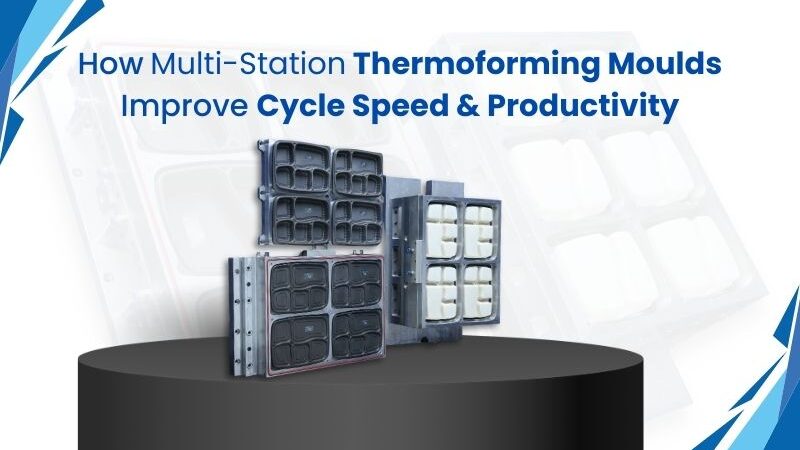
Multi-station thermoforming moulds are increasingly used by manufacturers aiming to improve production efficiency, consistency, and speed. These mould systems divide forming, punching, cutting, and stacking into separate stages, helping businesses handle higher volumes while maintaining precision and stability.
Understanding Multi-Station Thermoforming Moulds
Multi-station thermoforming moulds are designed to perform multiple operations in sequence, such as forming, pre-punching, cutting, and stacking. Each station focuses on a dedicated task, improving accuracy and ensuring smoother workflow for large-scale thermoforming production.
How Multi-Station Moulds Improve Cycle Speed
Multi-station moulds significantly reduce total cycle time by executing operations simultaneously across different stations. Key improvements include:
Parallel forming, cutting, and stacking
Reduced idle time between processes
Stable temperature control for faster forming
How They Boost Overall Productivity
By dividing the thermoforming workflow into multiple dedicated stages, these moulds enhance output quality and minimize defects. Common productivity benefits:
Lower rejection rates due to consistent cutting accuracy
Higher output capacity for bulk manufacturing
Support for multiple materials and product categories
Applications of Multi-Station Thermoforming Moulds
These moulds are widely used in packaging and product manufacturing that require precision and continuous production. Typical applications include:
Hinged containers and meal trays
Lids, clamshells, and bakery packaging
Fruit and vegetable punnets
Why Multi-Station Moulds Are Preferred by Manufacturers

Leave A Comment